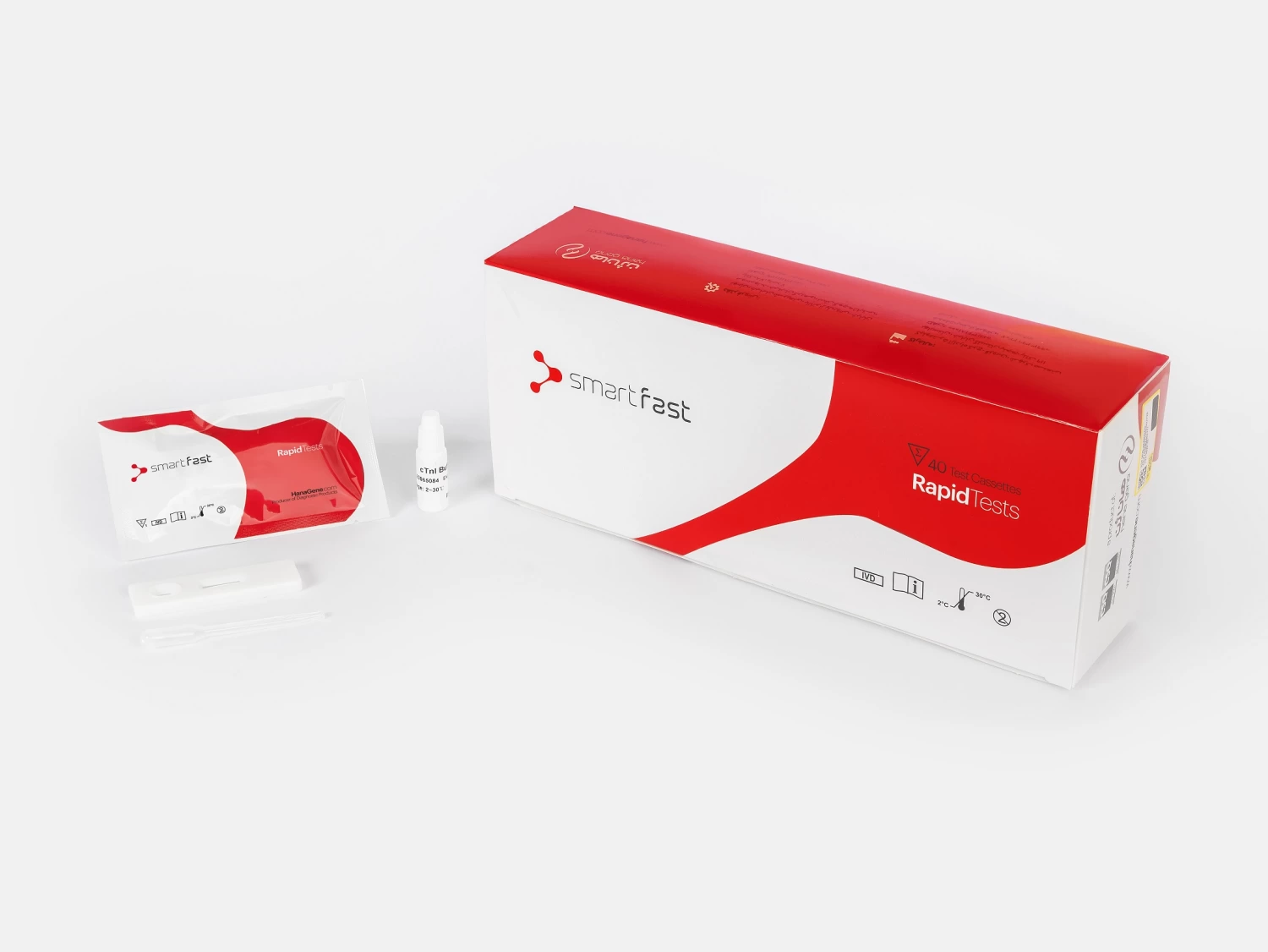
Available Formats
The Cardiac Troponin I (cTnI) Rapid Test is a qualitative immunochromatography assay for the detection of cardiac Troponin I in whole blood, serum, and plasma. It is intended for in vitro diagnostic use only.
Summary
Cardiac Troponin I (cTnI) is a cardiac-specific protein with a molecular weight of approximately 22.5 kDa and is a component of the troponin complex involved in the regulation of cardiac muscle contraction. Unlike Troponin C, which is present in both skeletal and cardiac muscle, the Troponin I and Troponin T isoforms are specific to cardiac muscle. This cardiac specificity makes cTnI an important biomarker for the assessment of myocardial injury and for supporting the diagnosis of acute myocardial infarction (AMI). Following myocardial injury, cTnI is released into the bloodstream approximately 4–6 hours after symptom onset. Elevated cTnI levels may remain detectable for approximately 6–10 days, providing an extended diagnostic window compared with CK-MB. Elevated cTnI may also be associated with other cardiac conditions, including unstable angina, congestive heart failure, and ischemic injury. The Cardiac Troponin I Rapid Test Cassette uses specific anti-cTnI antibodies and gold nanoparticle-based detection technology to provide a rapid and convenient qualitative detection of cTnI in whole blood, serum, and plasma. Detection limit: 0.5 ng/mL
- Function Method Basis
The Cardiac Troponin I Rapid Test Cassette is based on a lateral flow immunochromatographic assay. Anti-Troponin I antibodies labeled with gold nanoparticles are present in the conjugate pad, while specific anti-Troponin I antibodies are immobilized in the Test (T) line region. When the specimen is applied to the Sample (S) well, any cTnI present in the specimen binds to the labeled antibodies, forming an antigen-antibody complex. The complex migrates across the membrane and is captured by the antibodies in the Test (T) region, producing a visible colored line. If cTnI is not present in the specimen, no colored line appears in the Test (T) region. A colored line in the Control (C) region appears in both positive and negative tests, confirming that an adequate specimen volume has been added and that the test has functioned properly.
- Certain medications that may cause a false positive result
Attachments

Certifications & Standards

