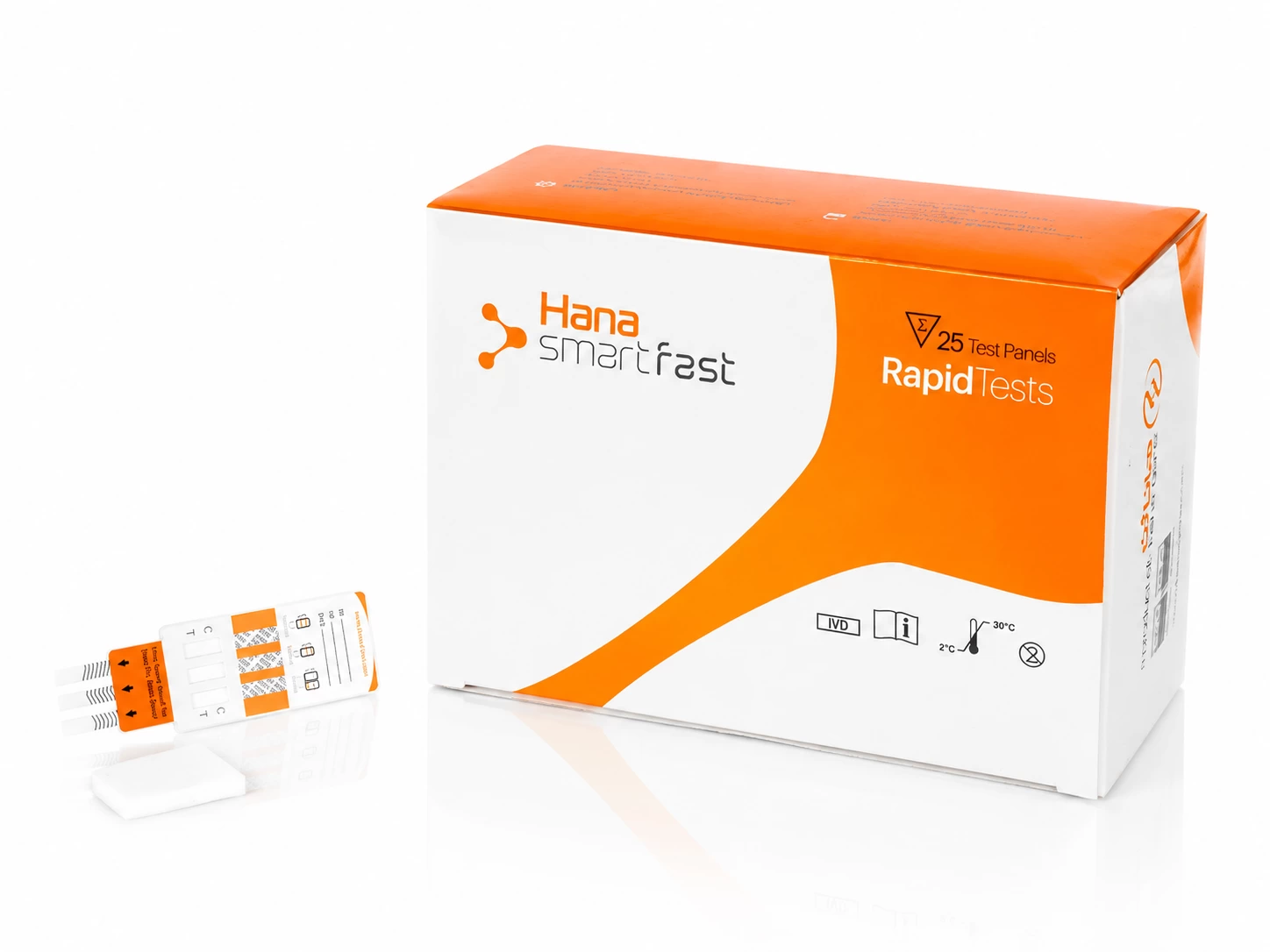
Available Formats
This rapid test panel is intended for the simultaneous screening of multiple drugs and their metabolites in human urine, which is only utilized for in vitro diagnostics (IVD).
Summary
The Multi-Drug Screening Rapid Test Panel in Urine includes separate tests employing an immunochromatography method. Due to the speed and sensitivity of immunoassay methods, they have been known as the best way to screen urine specimens for abused drugs. This test is a chromatography immunoassay method for the qualitative detection of the following substances in the urine: Amphetamine, Methamphetamine, Hashish, Methadone, Morphine, and Tramadol. It merely provides a preliminary result, therefore, an alternative method with more specificity is recommended to be used to confirm the initial results, in which case, the most preferred method is gas chromatography-mass spectrometry (GC MS). In order to report the obtained results from drug tests, especially when the initial results are positive, clinical and expert consultation is required.
- Function Method Basis
This multi-drug rapid test panel employs an immunochromatography method based on competitive binding. During the test, the urine specimen flows upward via capillary action. If the concentration of the analytes in the urine is below the cut-off (concentration limit), it does not bind to the binding sites of the antibodies coated with gold nanoparticles. Consequently, the antibody conjugated with nanoparticles will be absorbed by the coated antigen on the surface of the nitrocellulose membrane and will leave a colored line in the test area (T). Should the concentration of urine analytes be greater than the cut-off, no colored line will appear in the T area, since all the binding sites of the antibodies conjugated with gold nanoparticles are occupied. So, if the analyte concentrations in the urine specimen are above the cut-off, no colored line will be formed in the test area (T) due to drug competition, whereas if the urine specimen contains analyte concentrations lower than the desired level in the test, a colored line will appear in this area. In order to have a procedural control, a colored line always appears in the area of the control line (C), indicating the appropriate volume of the specimen added to the membrane.
- Certain medications that may cause a false positive result

Certifications & Standards

