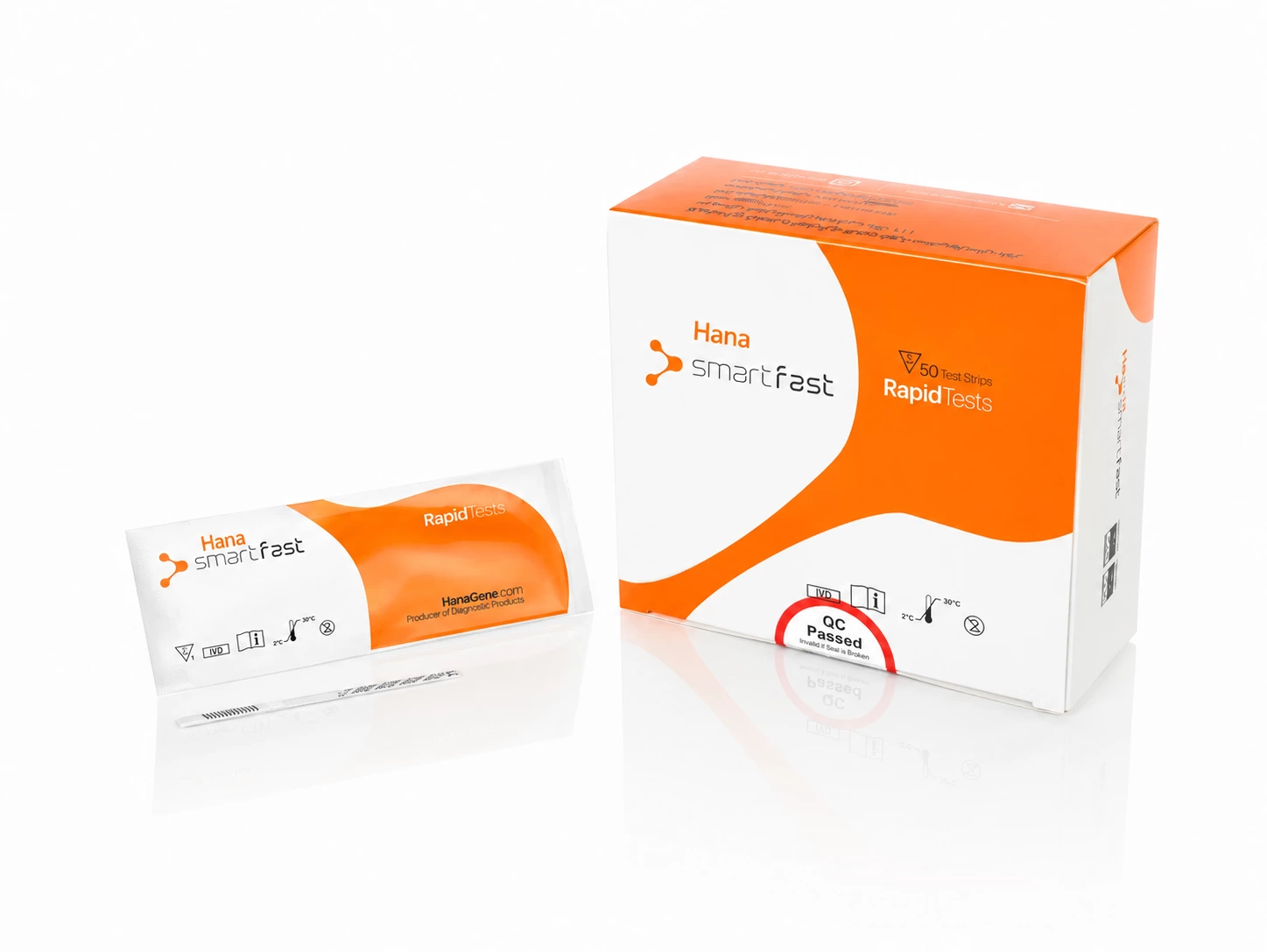
The COC Rapid Test Dipstick (Urine) is a Rapid chromatographic immunoassay for qualitative detection of Cocaine in human urine at a cut-off concentration of 300 ng/mL which is only utilized for in vitro diagnostics (IVD). It merely provides a preliminary result, therefore, an alternative method with more specificity is recommended to be used to confirm the initial results, in which case, the most preferred method is gas chromatography-mass spectrometry (GC-MS).
Summary
Cocaine is a strong central nervous system stimulant and local anesthetic. Potentially, Cocaine brings high energy and restlessness, as well as high sensitivity and spasms when used. Cocaine in large amounts causes fever, breathing problems, and unconsciousness. It is usually consumed by inhalation and intravenous injection. After use in a short period of time, Cocaine is excreted in urine in the form of Benzoylecgonine. Benzoylecgonine is a major metabolite of Cocaine and has a longer biological life than Cocaine (5 to 8 hours) and is usually detectable within 24 to 48 hours after use. COC Rapid Test is a urine screening test to detect increased levels of Cocaine metabolite in the urine. The test result becomes positive when the concentration level of Cocaine metabolite in urine is greater than 300 ng/mL. This screening test is provided by mental health centers and drug abuse treatment service providers.
- Function Method Basis
Rapid Cocaine urine test employs an immunoassay method based on competitive binding. Substances that may be found in urine specimen compete with ones metabolized by the liver to bind to antibodies. during the test, the urine specimen flows upward via capillary action. If the amount of Cocaine in the urine is below 300 ng/mL, it does not bind to the binding sites of the antibodies coated with gold nanoparticles. Consequently, the antibody conjugated with nanoparticles will be absorbed by the Cocaine on the surface of the membrane and will leave a colored line in the test area (T). Should the amount be greater than 300 ng/mL, no colored line will appear in the T area, since all the binding sites of the Cocaine antibodies are occupied. So, if the presence of Cocaine in the urine specimen is positive, no colored line will be formed in the test area (T) due to drug competition, whereas if the urine specimen contains Cocaine amounts lower than the desired level in the test, a colored line will appear in this area. In order to have a procedural control, a colored line always appears in the area of the control line (C), indicating the appropriate volume of the specimen added to the membrane.
- Certain medications that may cause a false positive result
|
Local anesthetics
Cocaine-containing local anesthetics |
|
Herbal / dietary substances
Coca leaf tea |

Certifications & Standards

